
Nahttypen: Understanding Human Sleep Types and Biological Rhythms

Nahttypen is a term often used to describe different human sleep patterns or biological “night types,” referring to how individuals naturally prefer to sleep, wake up, and function throughout the day. Every human being has an internal biological clock that influences energy levels, alertness, mood, and productivity. This internal rhythm is known as the circadian rhythm, and Nahttypen are variations of this rhythm.
Some people feel highly active in the early morning, while others feel more productive late at night. These natural differences are not random habits but are deeply connected to genetics, hormones, and brain chemistry. Understanding Nahttypen helps people improve their lifestyle, sleep quality, and overall mental and physical health.
What is Nahttypen?
Nahttypen refers to the classification of individuals based on their natural sleep-wake cycles. It explains why certain people are “morning types” while others are “night types.” The concept is closely related to chronobiology, which studies biological rhythms in living organisms.
A person’s Nahttypen determines when they feel most awake, when they perform best mentally, and when their body naturally prepares for rest. It is not just about preference but about biological programming that affects daily life from childhood to adulthood.
People often struggle when their lifestyle does not match their Nahttypen. For example, a night-type person forced to wake up early for school or work may experience fatigue, low concentration, and mood imbalance.
Main Types of Nahttypen
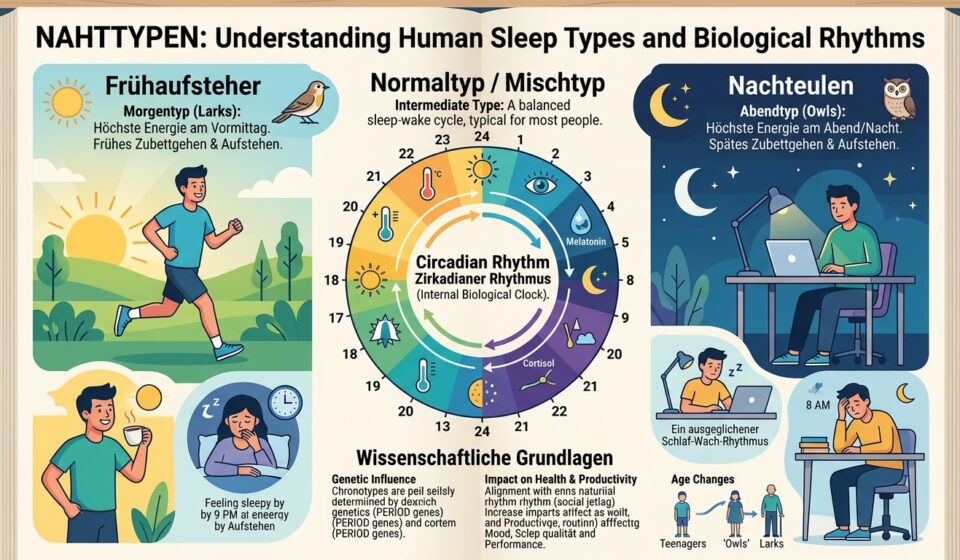
Human sleep types can generally be divided into three major categories based on activity patterns throughout the day and night.
Morning Type (Early Birds)
Morning types are individuals who naturally wake up early and feel most energetic during the first half of the day. Their peak performance usually occurs in the morning hours, and they tend to become tired earlier in the evening.
These individuals often find it easy to follow traditional schedules such as early school or office timings. Their biological clock is aligned with sunrise and daylight, which helps them maintain consistent sleep habits.
Morning types usually have better discipline in daily routines and may experience fewer sleep-related disruptions when following structured schedules.
Evening Type (Night Owls)
Evening types, also known as night owls, are individuals who feel more alert and productive during the evening or night hours. They often struggle with waking up early in the morning and may feel slow or unproductive during early hours of the day.
Their brain activity tends to peak later in the day, making nighttime their most creative and focused period. However, modern society’s early schedules can create challenges for night owls, leading to sleep deprivation and reduced performance.
Night owls often prefer flexible routines that allow them to work or study during late hours.
Intermediate Type (Balanced Type)
Intermediate types fall between morning and evening preferences. They do not strongly prefer early mornings or late nights and can adapt more easily to different schedules.
These individuals usually have more flexible sleep patterns and can adjust their routine depending on lifestyle demands. Because of this adaptability, they often experience fewer issues related to extreme sleep timing preferences.
Scientific Basis of Nahttypen
The concept of Nahttypen is deeply rooted in circadian rhythm science. The circadian rhythm is a 24-hour internal biological clock that regulates sleep, hormone release, body temperature, and energy levels.
A key hormone involved in Nahttypen is melatonin, which signals the body when it is time to sleep. Morning types release melatonin earlier in the evening, while night types release it later, delaying sleep onset.
Genetics also play a major role. Studies suggest that specific genes influence whether a person is naturally inclined toward morning or evening activity. Environmental factors like exposure to sunlight, screen time, and lifestyle habits can also shift a person’s Nahttypen over time.
How Nahttypen Affect Daily Life
Nahttypen influence almost every aspect of human behavior, from productivity to emotional well-being.
People whose lifestyle matches their Nahttypen tend to perform better academically and professionally. They experience better focus, improved memory, and stable mood patterns.
On the other hand, mismatch between lifestyle and Nahttypen can lead to sleep deprivation, irritability, stress, and reduced cognitive performance. For example, forcing a night owl into early morning routines can reduce efficiency and increase mental fatigue.
Nahttypen also affect social life. Morning types may prefer early social activities, while night types may enjoy late-night gatherings or solitary nighttime productivity.
Nahttypen and Health
Sleep type plays an important role in overall health. Proper alignment with natural sleep rhythm supports heart health, immune function, and mental stability.
When a person ignores their Nahttypen for a long time, it can lead to chronic sleep deprivation. This may increase the risk of anxiety, depression, obesity, and cardiovascular issues.
Good sleep alignment helps regulate metabolism and improves hormone balance. It also enhances brain function, emotional control, and stress management.
Maintaining a healthy sleep pattern according to Nahttypen is essential for long-term wellness.
Productivity and Performance
Nahttypen significantly impact productivity levels. Morning types often perform best in structured environments with early deadlines, while night types excel in creative and flexible tasks.
Understanding personal Nahttypen allows individuals to plan their most important tasks during peak energy hours. This leads to better efficiency and reduced mental strain.
For example, studying or working during peak alertness hours improves concentration and retention. Ignoring Nahttypen often results in procrastination and poor performance.
Companies and educational institutions are increasingly recognizing the importance of flexible schedules to accommodate different sleep types.
Lifestyle and Adaptation
While Nahttypen are natural, they can be adjusted slightly through lifestyle changes. Exposure to natural light in the morning can help shift the body toward earlier sleep cycles. Similarly, reducing screen exposure at night can support healthier melatonin production.
Regular sleep schedules, physical activity, and balanced diet also contribute to stabilizing Nahttypen.
However, it is important to understand that complete transformation from night type to morning type is not always possible, as biological factors remain dominant.
The best approach is adaptation rather than forcing change.
Importance of Understanding Nahttypen
Understanding Nahttypen helps individuals build a healthier relationship with sleep and productivity. It allows better time management, improved mental health, and enhanced performance in daily life.
It also promotes self-awareness, helping people recognize their natural strengths and limitations. Instead of fighting their biological rhythm, individuals can work with it to achieve better results.
In modern fast-paced life, where stress and sleep disorders are common, awareness of Nahttypen becomes even more important.
Conclusion
Nahttypen represent the natural diversity in human sleep patterns and biological rhythms. They explain why some people are early risers while others are night-active individuals.
By understanding Nahttypen, individuals can optimize their lifestyle, improve health, and increase productivity. Instead of forcing uniform schedules, respecting biological differences leads to better balance and well-being.
In the end, aligning daily life with one’s natural sleep type is not just a choice but a key step toward a healthier and more productive life.